King Pin Repair Service
Worn king pins are repaired or replaced with precision alignment to restore safe and smooth steering performance.
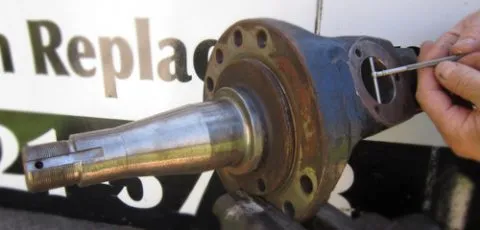
King Pin Repair in Northern California
Expert On Site King Pin Repair and Replacement
King pins are the critical pivot point of a truck’s steering system. When they wear out or fail, the result is poor handling, uneven tire wear, and unsafe driving conditions. For truck owners, fleet operators, and equipment managers in Northern California, reliable king pin repair is not optional — it is essential.
At Axle Surgeons™ of Northern California, we specialize in mobile king pin repair and replacement for heavy-duty vehicles. Using our proven on site process, we restore precision steering and extend axle life without the delays and costs of a traditional repair shop.
Since 1972, we have been the trusted choice for king pin service throughout Northern California and Southern Oregon.
How King Pin Repair Works — Step by Step
King pin repair requires specialized equipment and precise workmanship. Here is how our technicians handle the job in the field:
-
Steering inspection and diagnosis. Before any work begins, our technician checks steering play, measures king pin bore wear, and inspects the knuckle for damage. We determine whether the king pins can be replaced with standard parts or whether the bores need to be machined.
-
Disassembly. The steering knuckle is disconnected from the axle beam. This involves removing the tie rod ends, brake components, hub assembly, and related hardware. Each part is inspected for additional wear or damage.
-
King pin bore inspection. The king pin bores in the axle beam are measured with precision gauges. If the bores are worn oversize — which is common on vehicles with high mileage — they must be machined before new king pins can be installed.
-
Bore machining (when required). Using our mobile boring equipment, we machine the worn king pin bores to a precise oversize dimension and install hardened steel bushings. This restores the bore to exact factory tolerances and provides a proper fit for the new king pins.
-
King pin installation. New king pins are installed along with new bushings, thrust bearings, seals, and any other wear components. Everything is assembled to the manufacturer’s torque specifications.
-
Alignment and reassembly. The steering knuckle is reinstalled, tie rod ends are reconnected, and the brake and hub assemblies are put back together. The technician checks steering geometry and verifies smooth, play-free operation through the full range of motion.
What Causes King Pin Wear
King pins are subjected to every force that acts on the front axle — steering loads, braking forces, road impacts, and the weight of the vehicle itself. The most common causes of king pin wear include:
- High mileage. King pins are wear items by design. On a heavy-duty truck that covers 100,000 or more miles per year, king pin replacement may be needed every 2 to 4 years depending on operating conditions.
- Poor road conditions. Potholes, rough pavement, construction zones, and gravel roads dramatically increase the shock loads on king pins, accelerating wear.
- Lack of lubrication. King pin bushings require regular greasing. When lubrication is neglected, metal-on-metal contact causes rapid wear and scoring.
- Overloading. Running above the front axle weight rating increases the forces on the king pin assembly and shortens its service life.
- Corrosion. Road salt, chemicals, and moisture attack king pin surfaces and bushings, especially in winter conditions.
Signs Your King Pins Need Repair
Do not ignore these warning signs of king pin wear:
- Loose or wandering steering — the truck feels vague or drifts when driving straight
- Clunking sound when turning or hitting bumps, heard from the front axle area
- Uneven front tire wear — scalloping, cupping, or one-sided wear patterns
- Visible play in the steering knuckle when the front of the vehicle is jacked up and the tire is rocked
- Failed DOT inspection — worn king pins are a common reason for out-of-service violations
- Difficulty maintaining alignment — if the truck keeps going out of alignment after a front-end alignment service, worn king pins are usually the cause
A truck with worn king pins is a hazard to the driver and everyone else on the road. If your steering feels loose or your tires are wearing unevenly, get the king pins inspected.
Why Mobile King Pin Repair Makes Sense
King pin replacement at a traditional shop typically means towing the truck in, waiting for a bay, and leaving it there for one to three days while the work is completed. For an owner-operator, that is three days of zero revenue. For a fleet, that is one more truck sitting idle instead of hauling loads.
Our mobile process changes the equation. We pull up to your location with all the tooling and parts needed to complete the job. Most king pin replacements are finished in 4 to 8 hours depending on the condition of the bores and whether machining is required. The truck is back on the road the same day in most cases.
We work at truck yards, fleet terminals, distribution centers, loading docks, job sites, and even truck stops. Wherever your truck is, that is our shop.
Vehicle Types We Service
Our king pin repair service covers:
- Class 7 and Class 8 over-the-road trucks
- Day cab and sleeper cab tractors
- Vocational trucks including dump trucks, concrete mixers, and garbage trucks
- Medium-duty commercial trucks (Class 5 and 6)
- School buses and transit buses
- Heavy equipment with steering king pin assemblies
- Agricultural trucks and equipment
What’s Included
- Complete king pin repair or replacement
- Precision alignment restoration for safe steering
- On site mobile service — we come to your location
- High grade U.S. steel replacement parts
- Service for all heavy-duty truck makes and models
Why Choose Us for King Pin Repair
Our Axle Surgeons™ technicians handle the entire king pin repair from start to finish — on site, with no need to send your vehicle to a shop. We restore safe, smooth steering performance using our proven process and quality materials.
Frequently Asked Questions About King Pin Repair
How much does king pin replacement cost on a semi truck? The cost depends on the truck model, the condition of the king pin bores, and whether bore machining is required. Standard king pin replacement is less expensive than a job that requires boring and bushing the knuckle. Call (877) 999-2953 for a free estimate. Because we eliminate towing and shop overhead, our pricing is competitive with or better than traditional repair facilities.
How often do king pins need to be replaced? King pin replacement intervals vary widely based on mileage, load, road conditions, and lubrication habits. Many over-the-road trucks need king pin service every 200,000 to 400,000 miles. Trucks operating in severe conditions — construction, logging, or heavy off-road use — may need attention sooner. Regular greasing and inspection can extend king pin life significantly.
Can worn king pin bores be repaired? Yes. When king pin bores are worn oversize, we machine them to a precise oversize dimension and install hardened steel bushings to restore the bore to factory specifications. This is a standard part of our mobile king pin service and is done on site with our portable boring equipment.
Will worn king pins cause a DOT violation? Yes. Excessive king pin wear is a common reason for out-of-service violations during DOT roadside inspections. If there is visible play in the steering knuckle that exceeds the allowable limits, the vehicle will be placed out of service until repairs are made. Keeping king pins in good condition helps you pass inspections and stay on the road.
Do you replace king pins on all truck brands? We service all major truck brands including Kenworth, Peterbilt, Freightliner, International, Volvo, Mack, Western Star, and Autocar. We carry parts for the most common applications and can source specialty parts quickly for less common models.
Ready to Get Started?
Contact us today at (877) 999-2953 or request a free quote.
Ready to Get Started?
Contact us today and take the first step. Free consultations available.